

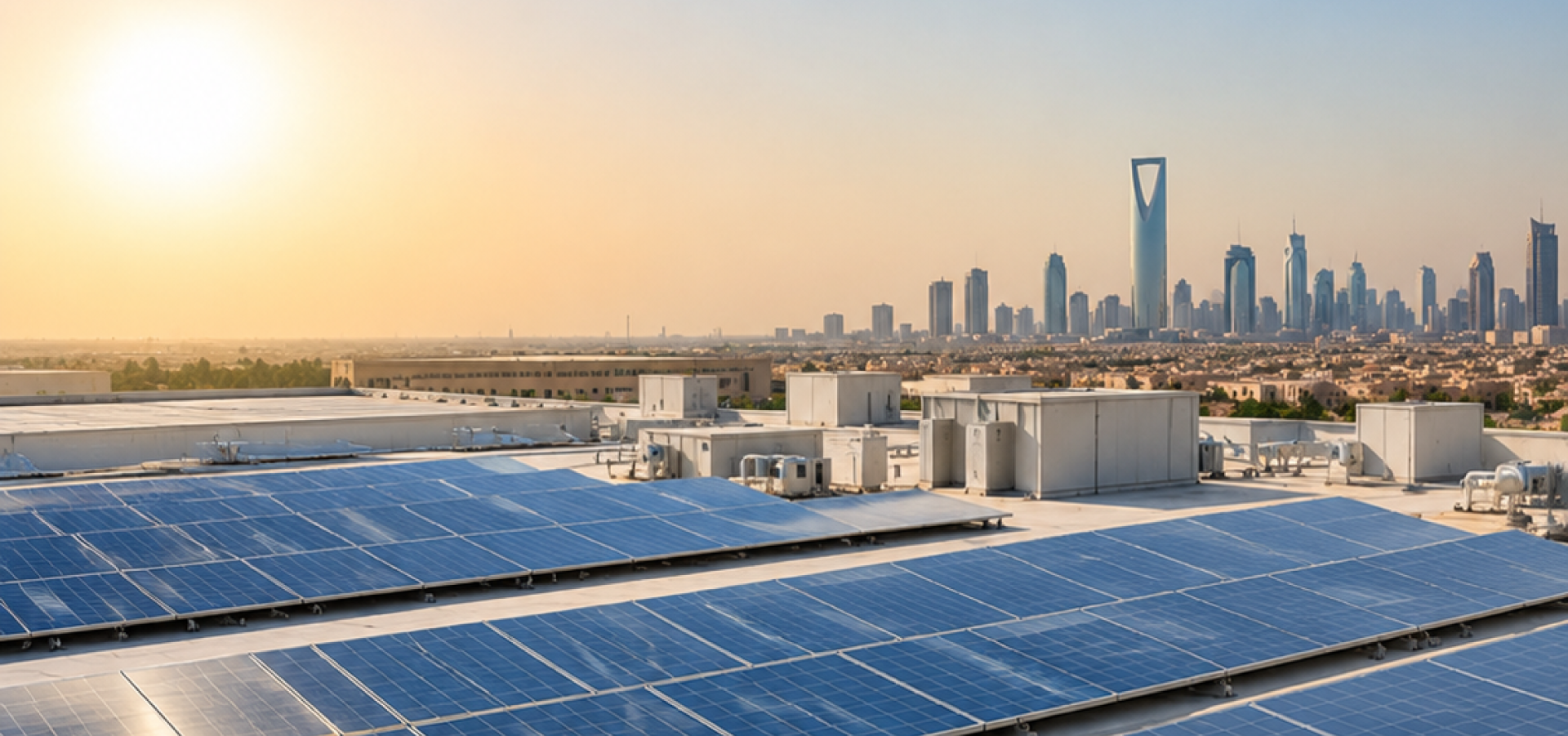
Solar Self Consumption in Saudi Arabia Starts with Smarter Sizing
How commercial and industrial facilities can align solar investment with electricity demand, connection requirements and the value of on-site consumption.
A solar project begins to deliver value when its electricity serves a real operating need. For a Saudi factory, warehouse or commercial development, the investment case depends on how closely generation follows the demand behind the meter.
As Saudi Arabia advances its energy transition, facility owners have an opportunity to produce part of their electricity on-site. The practical challenge is choosing a system that fits the business: its working hours, electricity account, electrical infrastructure and plans for expansion.
Understand the connection route before selecting capacity
Saudi Arabia has regulatory arrangements for small-scale solar PV and renewable generation for self-consumption. The applicable route determines authorisation, connection, metering and settlement requirements. Establish these before committing to plant capacity or equipment. [1, 2]
Capacity limits must be read within their specific framework. The SEC and National Grid SA transmission connection procedure published in March 2025 covers eligible systems up to the lower of 30 MW and the contracted load. Connection remains subject to applicable regulations and a network assessment. [2]
Confirm the current approval route and connection conditions for the actual premises at the outset.
Give self consumption and export their correct financial value
Solar electricity used directly can reduce a facility’s grid purchases. Exported electricity is accounted for under the applicable settlement arrangement. Model these flows separately rather than assume an exported kilowatt-hour has the same value as an avoided purchase. [1]
Separate Spilled Energy Charging Rules include a methodology for renewable spilled-energy remuneration. Confirm which arrangement governs the project before assigning a value to exports. [3]
Use the account tariff and the marginal energy charge displaced by solar. Add eligible export credits and deduct operating costs. Include savings on fixed charges only where the project demonstrably changes them.
Size the system around a measured load profile
A monthly electricity bill shows how much energy a facility buys. Interval demand data shows when it buys it. That distinction matters because solar output changes through the day, while production shifts, cooling loads and weekend schedules determine how much generation the facility can absorb.
Compare a representative year of consumption with expected solar output, accounting for seasonal changes, shutdowns and credible future demand. Roof area and structural suitability establish what can be installed; the load profile helps establish what is worth installing.
Consider two buildings with similar roofs. One runs manufacturing equipment throughout daylight hours. The other operates mainly at night. Their available installation area may be comparable, but their opportunities for direct solar consumption are different.
Compare several system sizes. Additional capacity may be justified where its generation has sufficient value. Daytime baseload is a useful starting point, while the financial model establishes the optimum capacity.
Evaluate flexible demand and storage before adding capacity
Some facilities can move suitable activities into solar production hours. Pumping, cooling or other flexible processes may increase direct consumption where operating requirements allow. The study should identify which loads can move and the practical limits on doing so.
Battery energy storage can shift electricity to a later period, but it adds cost and introduces conversion losses. Its value depends on the demand profile, operating strategy and any resilience requirement. A battery should have a defined financial or operational purpose in the design. [4]
Connect the financial model to project delivery
Expected savings depend on the installed system performing as designed. Roof loading, inverter selection, protection, metering and maintenance access all belong in the project scope. So do realistic allowances for local environmental conditions and ongoing operating costs.
After commissioning, monitor generation, imports and exports against the original model to identify performance issues and the effect of changes in facility operations.
How Al Aman supports solar self consumption
Al Aman Modern Energy provides solar and hybrid energy solutions alongside MEP engineering. Al Aman Modern Factory adds panels, switchgear and SCADA capabilities, while our operation and maintenance services support electrical assets throughout their operating life.
Other News
News
Powering Up SEC Turaif Site
Al Aman’s Energy Division has successfully commenced work on the SEC Turaif Site project, delivering innovative energy solutions to support regional infrastructure development.
August, 2025
News
Keeping the Power On: Why Generator Maintenance Is Your Facility's Ultimate Insurance Policy
October, 2026
News
Made in Saudi Arabia: Engineering the Future Locally
August, 2026